
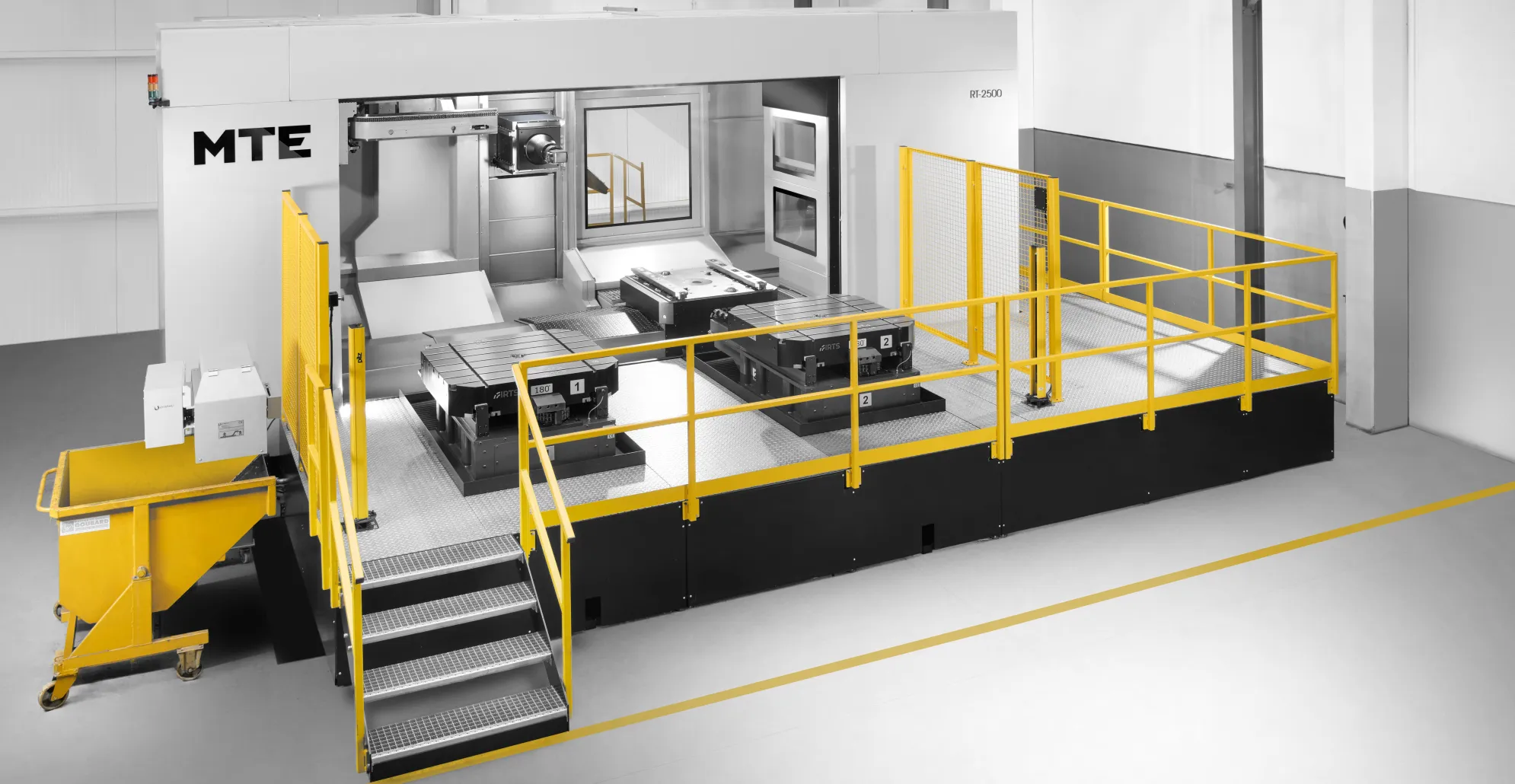
If someone had told us a few years ago that we, as a manufacturer of milling machines for machining large parts, would one day be working intensively on the subject of automation, we would probably have looked rather incredulous.
The components that are manufactured on our Bed type milling machines, Floor type milling machines and Fixed table travelling column milling machines are large, heavy and complex – and in batch sizes that are often anything but automation-friendly. Added to this is the enormous variety of components in mechanical engineering, which are rarely produced in traditional series.
But the past few years have taught us otherwise.
Why automation has suddenly become indispensable
Today, pure machine technology – i.e. performance, dynamics, stability and machining – can only be improved selectively. But the challenges facing customers have grown:
- Shortage of skilled workers,
- Cost pressure,
- high quality requirements,
- Deadline pressure.
So we asked ourselves the question: Where is there actually still potential?
The answer: in the set-up.
Because if the spindle is not running, the machine is not earning any money.
The game changer: set-up outside the machine
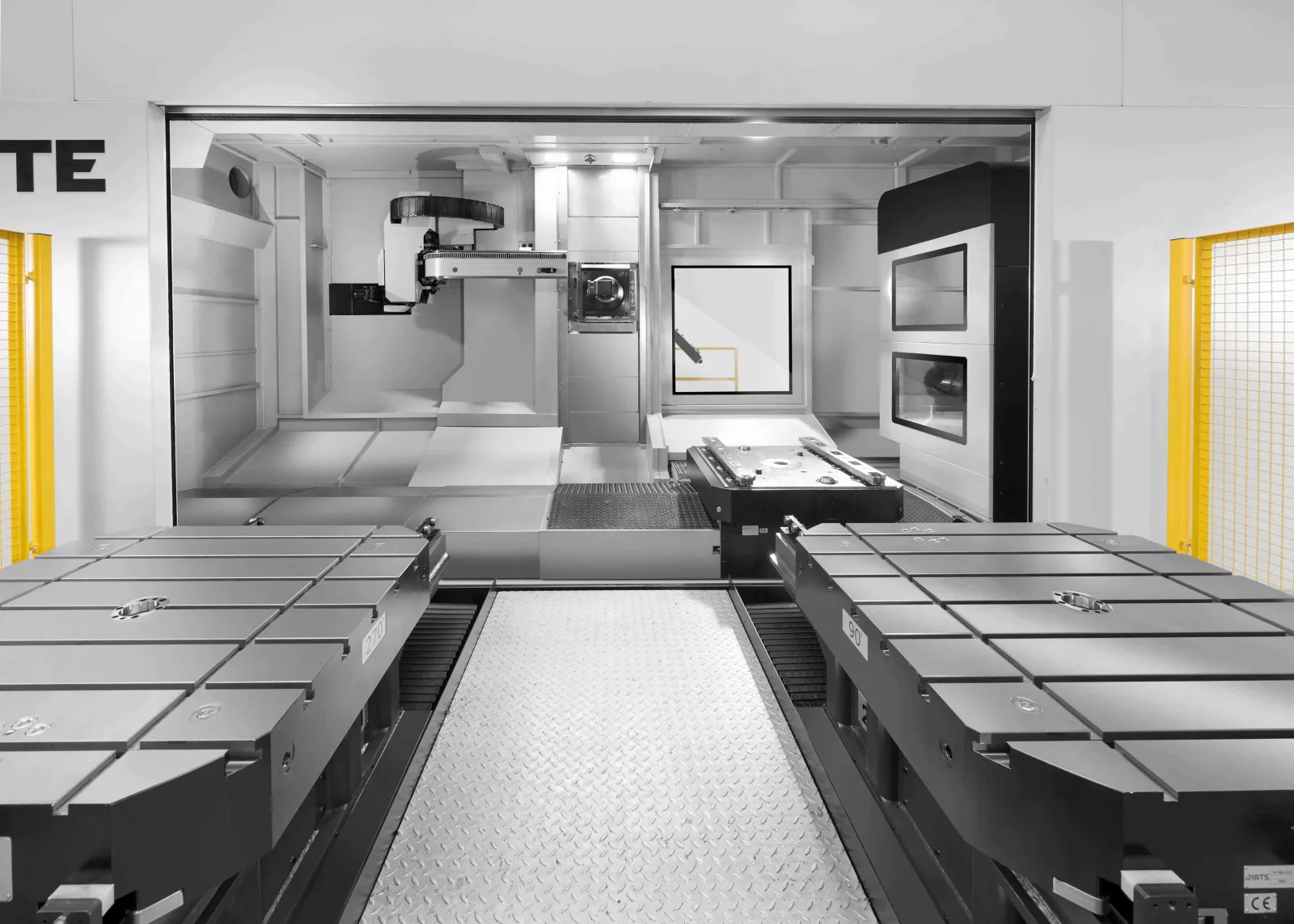
Today we can say: Whether with classic pallet systems, robot interfaces or special solutions – we are able to set up almost all of our machine models in parallel to production time.
And even for all component sizes in the large parts sector.
Even for different components in alternation!
In concrete terms, this means:
A completely new component is clamped outside the machine.
→ The machining process is still running in parallel in the machine.
→ Then the pallet or clamping device is changed.
→ Start machining.
Result: Maximum spindle running times – minimum downtimes.
And the best thing is that many systems can now also be retrofitted to older machine types.
Automated measuring and monitoring:
In addition to the pure set-up process, we can now fully automate other steps:
- Automated measurement of workpieces
- Sensory process monitoring (e.g. cutting force, vibration)
- Automatic tool monitoring
Even if much of this is no longer new technology, it is gaining enormously in importance today – because every additional hour that a machine can work unmanned counts.
Why automation is so tempting
Our Bed type milling machines, Floor type milling machines and Fixed table travelling column milling machines in particular benefit enormously from automation modules.
Advantages at a glance:
- 24/7 production: machines also run at night and at weekends.
- Less downtime: Set-up outside the machine keeps the spindle working.
- Consistent quality: Lower error rate thanks to automated processes.
- Better planning: Digital recording of all production data enables precise traceability.
- Modular expansion: Automation does not have to happen all at once – step by step is also possible.
But: Small companies need to take a closer look!
Automation is not a sure-fire success – especially not for smaller companies.
Challenges:
Costs: Pallet changers, automation modules, robots and, above all, software cost money.
Integration: A real problem is often not the machine itself, but the space provided by the customer. Many companies only have exactly the space on which the machine is to stand – and the space requirement is already exhausted.
Flexibility: In the case of highly varied production or frequently changing components, an experienced operator or even a second machine can sometimes be more efficient than a rigid system.
Service & expertise: More technology means more maintenance requirements – without a reliable partner, things become difficult.
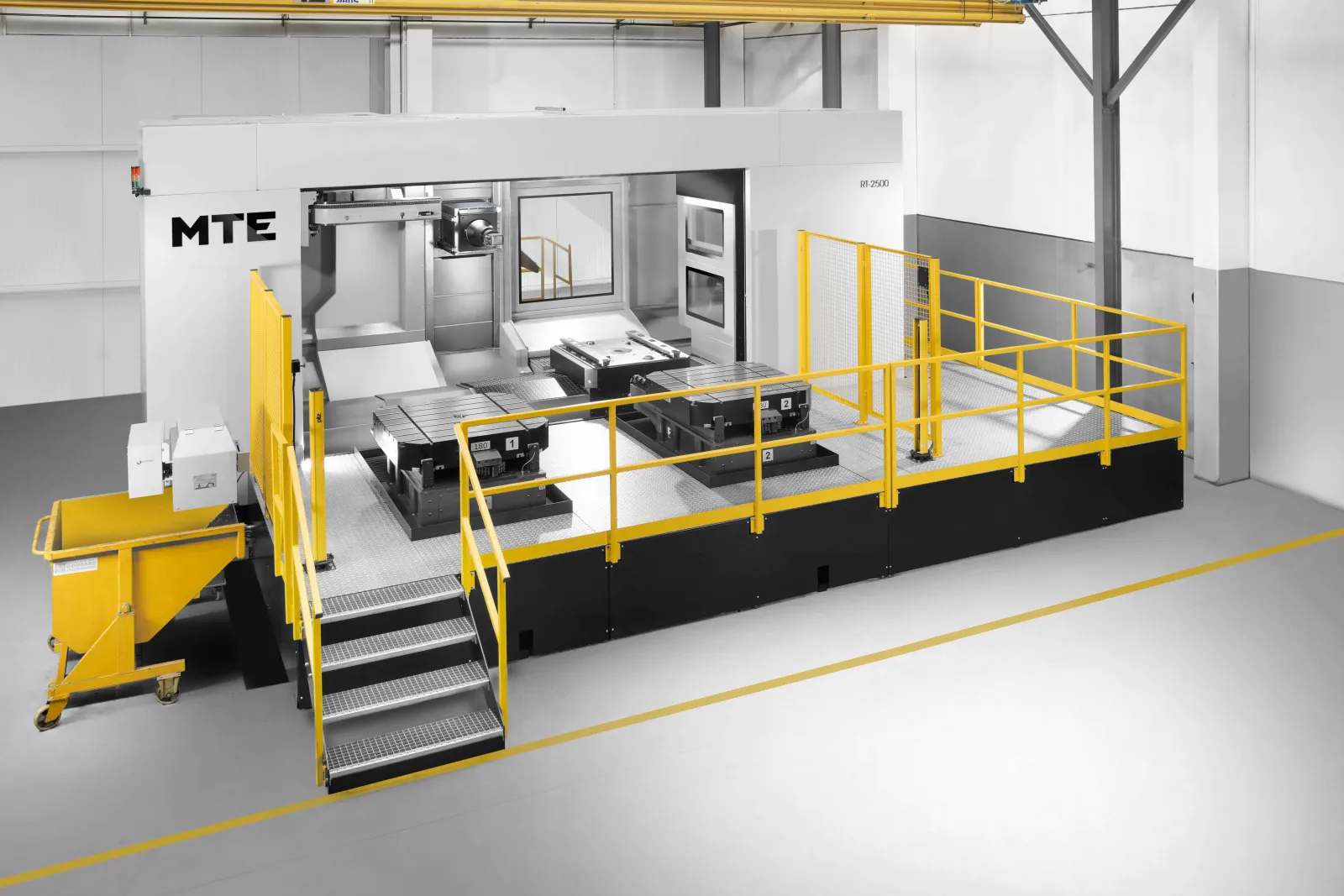
Our conclusion at MTE: Automation pays off – if you do it right
Automation is not an end in itself. It is a tool.
And like any tool, it only works if you use it correctly.
For us, this means
- Automation must match the application.
- It must be modular.
- It must remain flexible – especially with individual components.
- And it also has to work with large parts – in other words, with precisely the components for which our Bed type milling machines, Fixed table travelling column milling machines and Fixed table travelling column milling machines were built.
If this is achieved, then automation can take mechanical engineering – and the entire machining of large parts – to a new level.
More parts. More efficiency. More reliability. Less stress.
Step by step – but with a big impact.