A Project That Optimally Combines Practical Application and Technology
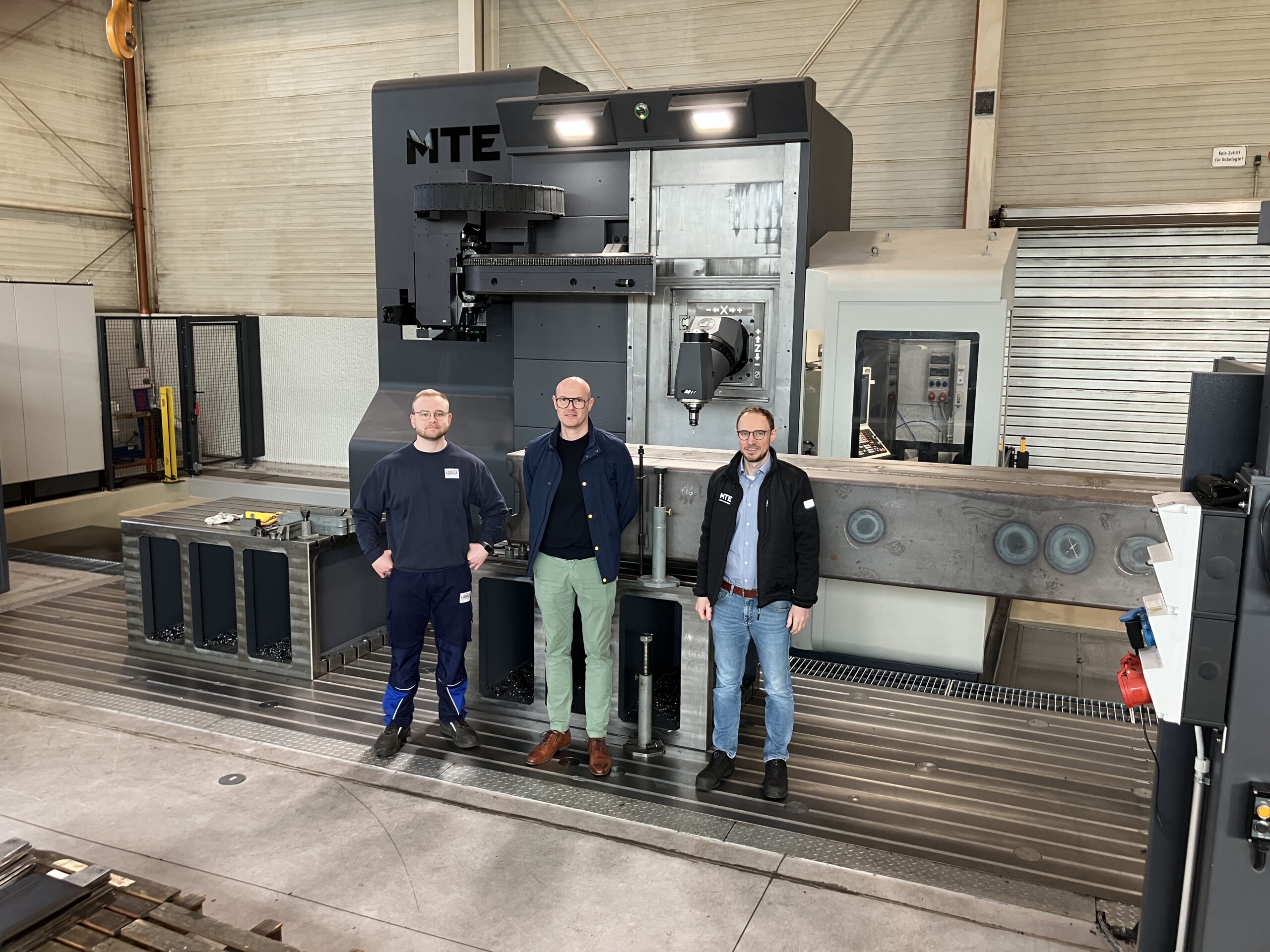
In this article, I, Michael Schäfer, would like to provide insight into a project that I had the privilege of personally overseeing. Together with the team at Lödige Machine Warburg GmbH , we developed a manufacturing solution that is consistently tailored to the demands of everyday practice.
To me, this project demonstrates particularly impressively how the right machine concept can significantly increase both flexibility and efficiency in mass production.
High Standards in Our Own Manufacturing
Lödige Machine Warburg GmbH is a subsidiary of the Lödige Industries Group, an internationally active provider of innovative solutions in the fields of parking systems, car lifts, airport logistics, and industrial conveyor technology.
Within the corporate group, the Warburg facility plays a key role in the manufacture of sophisticated machines and assemblies. The systems installed worldwide place high demands on precision, reliability, and vertical integration. These requirements are directly reflected in day-to-day production.
The range of parts extends from small components to steel structural components several meters long. The goal was therefore to be able to perform as many machining steps as possible in-house while reducing the number of setups. The ideal solution: a floor type milling machine for maximum flexibility
Working closely with Sven Becker, Head of Manufacturing, and Jan-Niklas Stöber, Team Leader of VF Machining, a machine concept was developed that is precisely tailored to these requirements.
Sven Becker describes the initial situation as follows:
“We have a very wide range of parts here—from smaller components to very long columns. It was important to us to be able to machine as much as possible in-house and in a single setup.”
My approach was to create a solution that would enable the machining of both large, long parts and the cost-effective production of smaller, flatter components—while also offering ergonomic benefits for the operators.
The decision was made to purchase an MTE FBF-S 14,000 floor type milling machine with the following travel paths:
X-axis: 14,000 mm
Y-axis: 2,000 mm
Z-axis: 1,500 mm
A well-designed clamping system for various workpieces
A key factor in its success is the flexible clamping system.
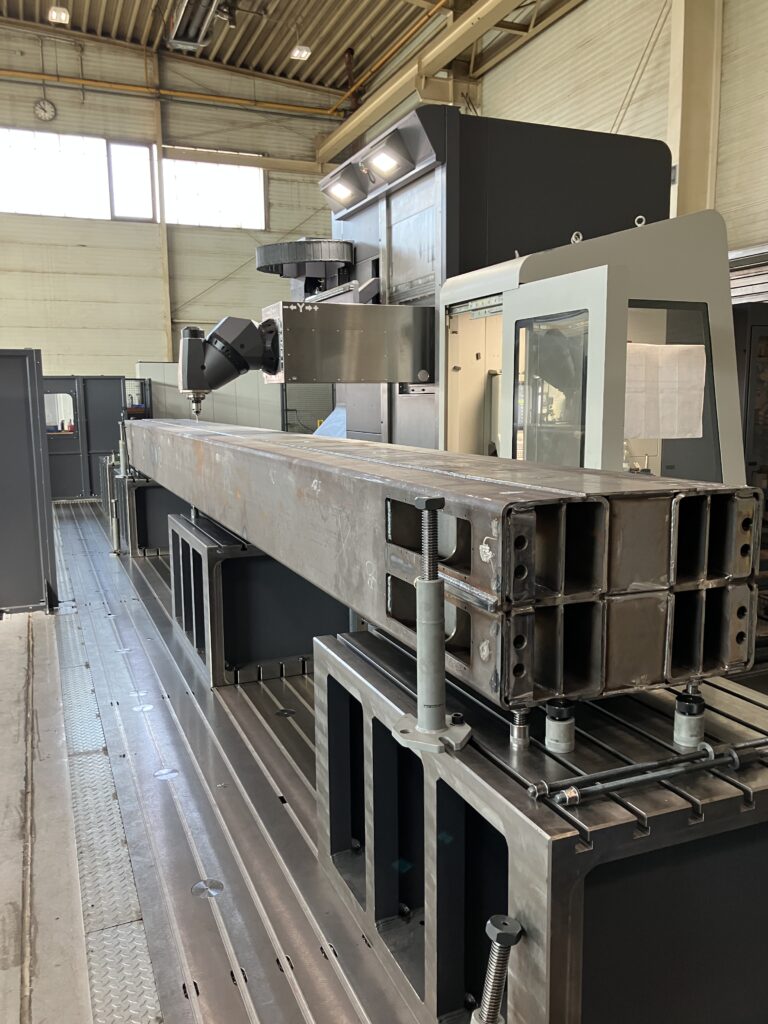
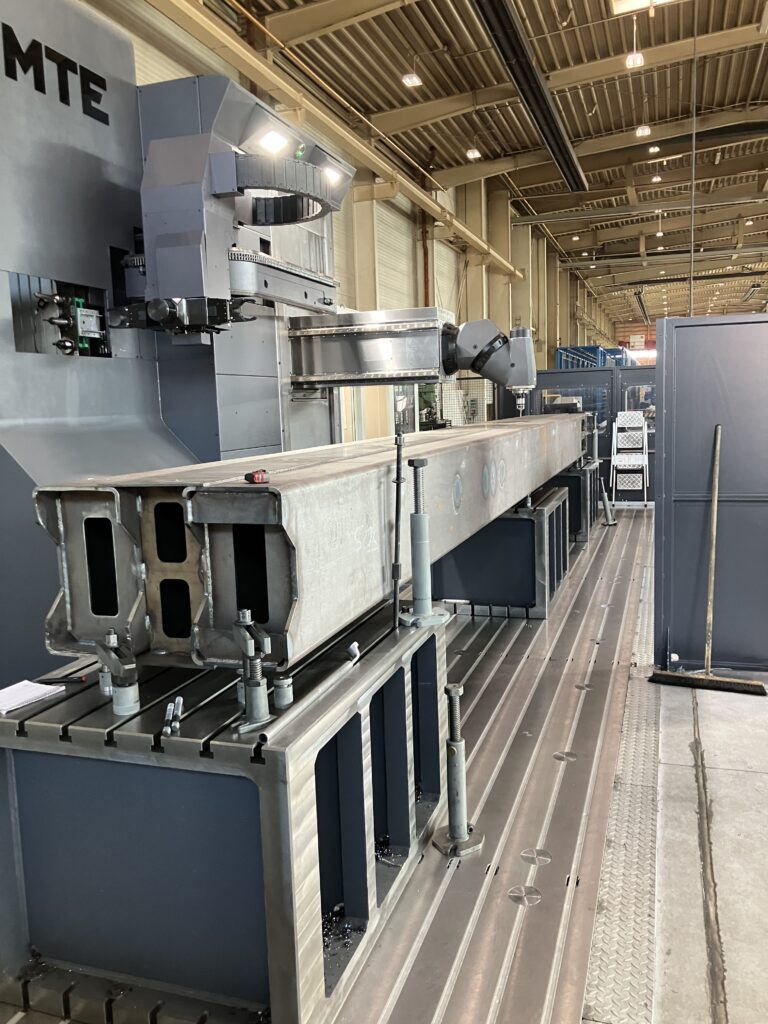
A large clamping plate array is available in the machine bed for long workpieces. In addition, four flexibly positionable clamping tables measuring 1,500 x 1,000 x 850 mm are used.
In my view, this is precisely where one of the greatest advantages of this solution lies. The combination of the clamping plate array and mobile tables enables the cost-effective machining of a wide variety of workpieces—from long steel structures to smaller individual parts. Thanks to the T-slots, clamping devices can be positioned flexibly. This allows for quick and efficient setup of both traditional vise operations and complex long parts.
A stationary control panel and a traveling control panel, both equipped with a modern Heidenhain TNC 7 control system, ensure convenient operation. This ensures that the machining process remains clearly visible at all times.
High machining flexibility thanks to the diagonal milling head
Another key component of the machine is the diagonal milling head.
It features a double hirth coupling with an indexing accuracy of 0.01° x 0.01°, offering an exceptionally high degree of precision and flexibility.
This allows long steel structures to be machined on five sides in a single setup. To machine the underside, the rear joint of the milling head is swiveled 180°. The spindle then points upward, allowing the workpiece to be machined from below.
This solution significantly reduces setup changes while simultaneously improving machining accuracy.
Greater efficiency and higher added value
The new floor type milling machine has significantly optimized the manufacturing processes.
Sven Becker explains:
“We only need small quantities of these long components. In the past, we had to outsource their production—today, we manufacture them entirely in-house.”
The advantages are obvious:
- Elimination of external machining costs
- No additional transportation and logistics costs
- Greater process reliability
- Shorter lead times
- Greater value creation within our own company
This provides significantly greater independence and flexibility in production planning, especially when it comes to special and large components.
A Conscious Decision to Use MMS Instead of KSS
Even during the planning phase, it became clear that a conventional coolant system was not absolutely necessary for the intended machining tasks.
Production is characterized by steel machining, a small number of deep-hole drilling operations, and a minimal amount of aluminum or stainless steel machining. For this reason, a conscious decision was made to use minimum quantity lubrication (MQL).
This technology offers numerous advantages:
- A Cleaner Machine
- Less maintenance
- Elimination of time-consuming coolant maintenance
- Less cleaning required on the workpieces
- More sustainable manufacturing process
From a technical and economic standpoint, this was the optimal solution for Lödige’s requirements.
Collaboration with MTE: Technology and Service from a Single Source
MTE proved to be the ideal partner for implementing the project.
From the very beginning, the focus was not on the machine itself, but on the customer’s specific task. The requirements were analyzed in detail and translated into a suitable machine concept.
Sven Becker describes his experience as follows:
“From the very first conversation, we felt that MTE truly understood our requirements. The site visits were very informative for us—there, comparable steel components were being machined, some of them already using MMS. That further reinforced our decision.”
In addition to the machine itself, it was the service that really won us over. The Montabaur location, with its experienced technicians who can be reached quickly when needed, is a key factor for us. The milling head workshop and the option to borrow milling heads when needed also provide additional peace of mind during ongoing operations.
“Ultimately, it’s also a matter of trust: Knowing that help will be provided quickly and easily in an emergency was crucial for us—even though we haven’t had to rely on it yet.”
Ultimately, it was precisely this combination of technical expertise, proven track record, and a robust service concept that was a key factor in the investment decision.
Conclusion
In my view, this project is an excellent example of how a optimally designed floor type milling machine can sustainably improve manufacturing.
Long travel paths, a well-designed clamping system, state-of-the-art milling head technology, and a consistent focus on actual manufacturing requirements enable significant increases in efficiency in the machining of large workpieces.
I have particularly fond memories of working with the team at Lödige Machine Warburg GmbH: they were open, solution-oriented, and pragmatic. That’s exactly how successful projects are created—and that’s exactly how sustainable improvements in manufacturing can be achieved.